
ICARDA Joins Regional Efforts to Strengthen Sustainable Rangelands and Pastoral Systems in Dry Regions
Start Date
January 26, 2026
End Date
January 28, 2026
Type
General event
Location
Hammamet, Tunisia.

Regional Conference: Building a Shared Vision for Sustainable Rangelands and Pastoral Communities in the Near East and North Africa (NENA)
ICARDA, together with the Food and Agriculture Organization of the United Nations (FAO), the International Land Coalition, the IUCN Regional Office for West Asia and Mediterranean Cooperation, the Sahara and Sahel Observatory, the League of Arab States, the CEDARE, and the Arab Organization for Agricultural Development, convened policymakers, researchers, and pastoral stakeholders for the Near East and North Africa (NENA) Regional Conference: Building a Shared Vision for Sustainable Rangelands and Pastoral Communities in the Near East and North Africa (NENA), The event, held in Hammamet, Tunisia from 26 to 28 January 2026, officially launched the International Year of Rangelands and Pastoralists (IYRP) 2026 in the NENA region.
ICARDA contributed to the conference through Sustainable Investments for Large Scale Rangeland Restoration project (STELARR) and the CGIAR Multifunctional Landscapes science program, a cross-center initiative that brings together experts to advance participatory and nature-based approaches to landscape management and supports global advocacy for sustainable rangeland restoration including IYRP 2026
The conference opened with a Ministerial Session, bringing together senior government officials and regional partners, and reaffirmed their joint political commitment to sustainable rangeland management and pastoral development.
During the opening session, ICARDA’s Research Team Leader of Rangeland Ecology and Forages, Dr. Mounir Louhaichi, presented an overview of rangelands in the NENA region, highlighting key challenges, opportunities, and the strategic importance of the International Year of Rangelands and Pastoralists. He explained that rangelands cover approximately 50 to 70% of land area in many NENA countries, and that pastoralism remains one of the most sustainable food systems, particularly in dry regions.
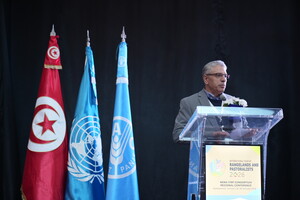
However, despite their importance, Dr. Mounir shared that rangelands face mounting pressures, including climate stress and environmental degradation, weak governance and insecure land tenure, and the continued marginalization of pastoral communities and their indigenous knowledge.
“Rangelands are not marginal lands. They support millions of livelihoods and are central to climate resilience, food security, and social stability across the NENA region. Real impact comes when pastoralists are recognized as partners and stewards in dryland transformation,” said Dr. Mounir.
Over the three-day conference, participants addressed rangeland governance, climate and biodiversity challenges, pastoralist rights, and research and innovation priorities, while exploring integrated approaches to restore rangelands, strengthen pastoral livelihoods, and enhance resilience across dryland ecosystems in the NENA region.
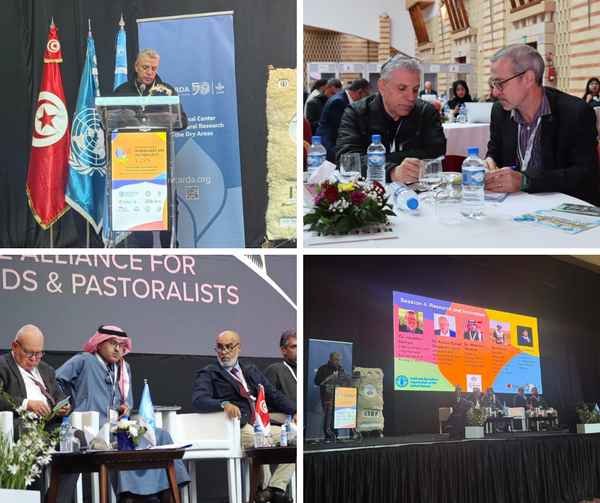
The second day focused on rights, inclusion, and innovation. ICARDA led a dedicated session on research and innovation to address pressing research needs and gaps in the NENA region. Discussions covered priority research areas for sustainable rangeland management, ongoing innovations supporting pastoral livelihoods, and practical examples of science-based solutions from across the region.
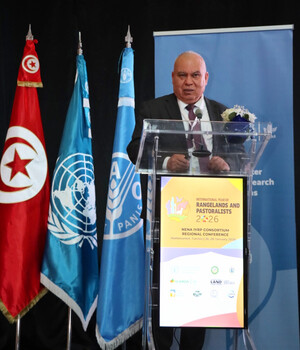
Dr. Azaiez Ouled Belgacem, Rangeland Ecology and Management Specialist and Country Coordinator – Tunisia presented insights on research needs and gaps in terms of rangeland and pastoral systems in the NENA region. He underscored the need to bridge science and practice. Main gaps include fragmented and non-harmonized rangeland monitoring systems; limited evidence on large-scale restoration in hyper-arid environments; weak native seed production and supply systems; governance and policy gaps related to tenure, presented insights on research needs and gaps in mobility, and co-management; and cross-cutting shortcomings in equity, socio-ecological integration, and knowledge exchange.
Filling these gaps would help Improve restoration success at scale by linking ecological science with socio-economic realities; Provide managers and pastoralists with actionable tools and measurable benchmarks to monitor progress and adapt strategies over time; Enhance policy frameworks that support sustainable land management, presented insights on research needs and gaps in and ecosystem service provision; and Strengthen resilience of rangelands in the face of climate change, land-use change, and socio-economic pressures.
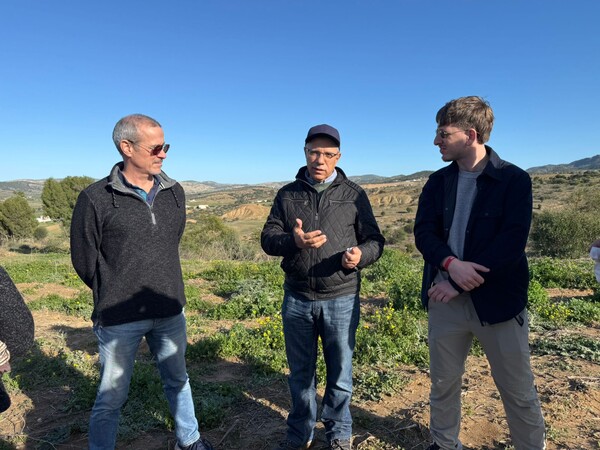
The three-day event concluded with a field visit to rangeland sites in Zaghouan, Tunisia, where participants explored integrated solutions for silvopastoral restoration options and gained hands-on insight into dryland rangeland ecosystems
The conference also marked the launch of the NENA IYRP Consortium and the adoption of a Joint Action Agenda to support coordinated regional action on sustainable rangeland management throughout 2026.
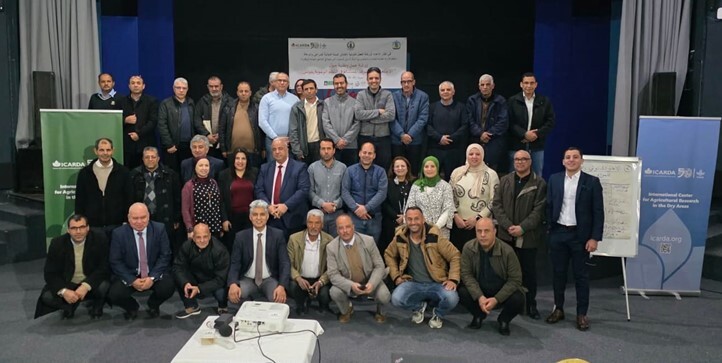
This regional conference followed a national workshop ICARDA organized earlier in January in Medenine, Tunisia with the General Directorate of Forests, that focused on Restoration and Sustainable Management of Pastoral Systems. The workshop brought together national partners (DGF, OEP, National Gene Bank, ) and international organizations (ICARDA, OSS and WWF) to strengthen a shared understanding of pastoral systems as economic, environmental, and cultural assets, and to promote a shift toward viewing rangelands as multifunctional socio-ecological landscapes. These discussions helped shape and inform the regional dialogue and commitments highlighted during the IRYP regional conference.
Drawing on decades of experience, ICARDA is playing a leading role in national and regional efforts to develop practical innovations to manage and restore rangelands across pastoral, agropastoral, and silvopastoral systems in dryland regions.


