Food Systems Under Strain: Navigating Conflict, Climate, and Scarcity

Hunger today is no longer simply a failure of food production, but increasingly a consequence of conflict.
Conflict destroys infrastructure, displaces communities, and fractures supply chains. It drives up energy costs, which feed directly into fertilizer markets, raising agricultural input prices, reducing application rates, and ultimately lowering yields. This then translates into not only higher food prices, but also a gradual weakening of production systems. Climate extremes compound these pressures, while economic instability limits households' ability to absorb rising prices. Each of these forces is damaging on its own, but together, they are destabilizing.
Around 673 million people worldwide experienced hunger in 2024, roughly 8.2% of the global population. In 2025, some 2.3 billion people faced moderate or severe food insecurity, and over 2.6 billion people could not afford a healthy diet. Conflict and climate shocks remain the primary regional drivers, with more than 87 million people facing hunger in East and Southern Africa and 52 million projected to be acutely food insecure in West and Central Africa by mid-2026.
In the Arab Region, more than 66 million people faced hunger in 2023, with conflict as the main driver. The overlapping pressures of conflict, climate shocks, and economic instability occur not as successive crises, but as compounding ones that drive food insecurity. A “perfect storm” is now unfolding in real time across the Middle East, and,although the immediate effects on trade flows and prices are still being revealed, rising energy and fertilizer costs are already shaping production decisions and will ultimately profoundly influence who goes hungry and where.
Import-dependent countries, particularly across the dryland regions where ICARDA works, are among the most exposed to these dynamics, however, in distinct ways. Low- and middle-income countries feel these impacts through disrupted production, reduced yields, and declining livelihoods. In the Persian Gulf, where food systems rely heavily on global markets for both food and agricultural inputs, they face immediate vulnerability to supply breakdowns, rising costs, and pressure on national food security strategies.
This complex reality has implications for how responses are designed, and addressing one constraint at a time is insufficient. At ICARDA, our work begins with the fundamentals that determine whether food systems can absorb sudden shocks or amplify them.
Access to high-quality seed is the starting point. Without it, even the most resilient systems cannot function. In conflict-affected contexts, this becomes particularly acute. In Syria, ICARDA’s efforts to restore seed systems are rebuilding the pipeline from early generation seed to certified production, enabling farmers to access locally adapted, drought-tolerant cereals and legumes. At the same time, our work in Sudan has shown that strengthening domestic seed systems through partnerships with national research institutions and the private sector can reduce reliance on imports and improve both productivity and reliability under difficult conditions.
Crop choice is also key. Modern food systems rely heavily on a narrow set of staples such as wheat, maize, and rice, leaving them exposed to climate and market shocks. However, diversifying what is grown must also be matched by shifts in what is consumed. Low-diversity diets not only increase systemic risk but also limit nutritional outcomes. Rebalancing diets toward more diverse, plant-rich foods could improve health outcomes at scale, with evidence suggesting that dietary shifts alone could prevent millions of premature deaths annually while reducing environmental pressures.
In many dryland regions, resilience lies in crops such as sorghum, lentil, and chickpea, as well as other neglected and underutilized species that are naturally adapted to heat, water scarcity, and poor soils. They require fewer inputs and perform where major cereals struggle. In addition, some achieve water productivity up to 30% higher than wheat or maize. Legumes like chickpea and cowpea improve soil fertility by increasing organic matter, improving nutrient-use efficiency, and reducing dependence on synthetic inputs. ICARDA’s field experiments in Morocco on integrating lentils, chickpeas, and faba beans into cereal systems reduce the need for nitrogen fertilizer by 25%.
As fertilizer markets tighten, ICARDA is also advancing alternative approaches to soil fertility, including biofertilizers, organic amendments, and biochar. Combined with conservation agriculture (CA) practices that restore soil structure, retain moisture, and stabilize yields, this integrated package offers a practical pathway to sustain production under economic and environmental stress.
For example, ICARDA's research demonstrates that CA can increase wheat yields by 16-19% while reducing production costs. In Jordan, farmers achieved wheat yields 16% higher than conventional practices, generating net returns of USD 296 per hectare (ha). In Iraq, CA adoption grew from zero ha in 2007 to over 20,000 ha in 2019. In Morocco, CA adoption grew from 12,000 ha in 2019 to over 160,000 ha in 2025. In Algeria, the area under CA increased from 7,000 ha in 2019 to 31,000 ha in 2025. Against the backdrop of conflict and climate stresses, these productivity gains are vital for enhancing food systems’ self-reliance and resilience.
Water remains the binding constraint, and addressing it requires an integrated approach. The water-energy-food-environment (WEFE) nexus underscores how water scarcity, energy access, and environmental degradation are deeply interconnected, requiring solutions that strengthen the system rather than optimizing one part at the expense of others. One example of how WEFE operationalized is through integrated desert farming systems (IDFS).
IDFS is defined by how multiple components, such as climate-resilient crops, livestock, water management, and renewable energy, are combined within a single system. Approaches such as protected agriculture, water harvesting, and solar-powered irrigation are paired with regenerative practices that restore soil health and reduce waste by reusing and recycling resources. Digital tools further enhance efficiency and decision-making. Crucially, these systems also create opportunities for rural communities to build skills, diversify incomes, and strengthen livelihoods under increasingly constrained conditions.
Especially in water-scarce regions, producing more with less is essential to maintaining agricultural viability, and this extends beyond production. In many dryland systems, a significant share of food and the water used to produce it is lost after harvest. ICARDA’s work in Upper Egypt shows what can be recovered. Simple post-harvest innovations reduced tomato losses from 30% to 10%, increased water productivity by up to 28%, and delivered system-level gains of nearly 40%.
At the same time, reducing exposure to energy disruptions is critical to maintaining production under volatility. ICARDA’s innovations in solar-powered irrigation and water management are reducing dependence on diesel generators and grid electricity, while digital tools are helping farmers optimize input, manage risk, and improve decision-making under increasingly uncertain conditions.
These are not separate interventions, but parts of an interconnected system. ICARDA’s 50 years’ of experience researching and developing agricultural innovations are shaping productivity and improving livelihoods in a region facing increasing instability.
As conflict and climate continue to reshape global and regional dynamics, their impact on food systems will only deepen. The question is not whether food systems will be affected, but whether they are prepared to withstand and recover from these shocks. Investing in resilient agriculture—rooted in strong seed systems, adapted crops, and efficient use of resources—is essential not only to feed populations in vulnerable regions but also to reduce risk in food-import-dependent systems.
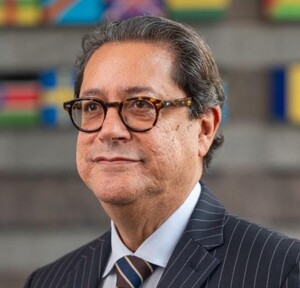
Opinion Piece by Aly Abousabaa, Director General, ICARDA