Promoting Fertilizer Efficiency and Sustainability in Maize-Based System in Pakistan
Start Date
June 02, 2025
End Date
June 03, 2025
Type
Training course
Location
Pakistan

Farmers Field Day
Under the ICARDA-USDA Fertilize Right (FR) Pakistan project, ICARDA, in collaboration with the Soil Fertility Research Institute (SFRI) and the Institute of Soil and Environmental Sciences (ISES) of the University of Agriculture Faisalabad (UAF), hosted two Farmer Field Days (FFDs) in June in Sahiwal, Punjab. The events aimed to promote the balanced use of fertilizers using the 4Rs strategy: Right Source, Right Rate, Right Time, and Right Place, while encouraging sustainable nutrient management in maize-based systems
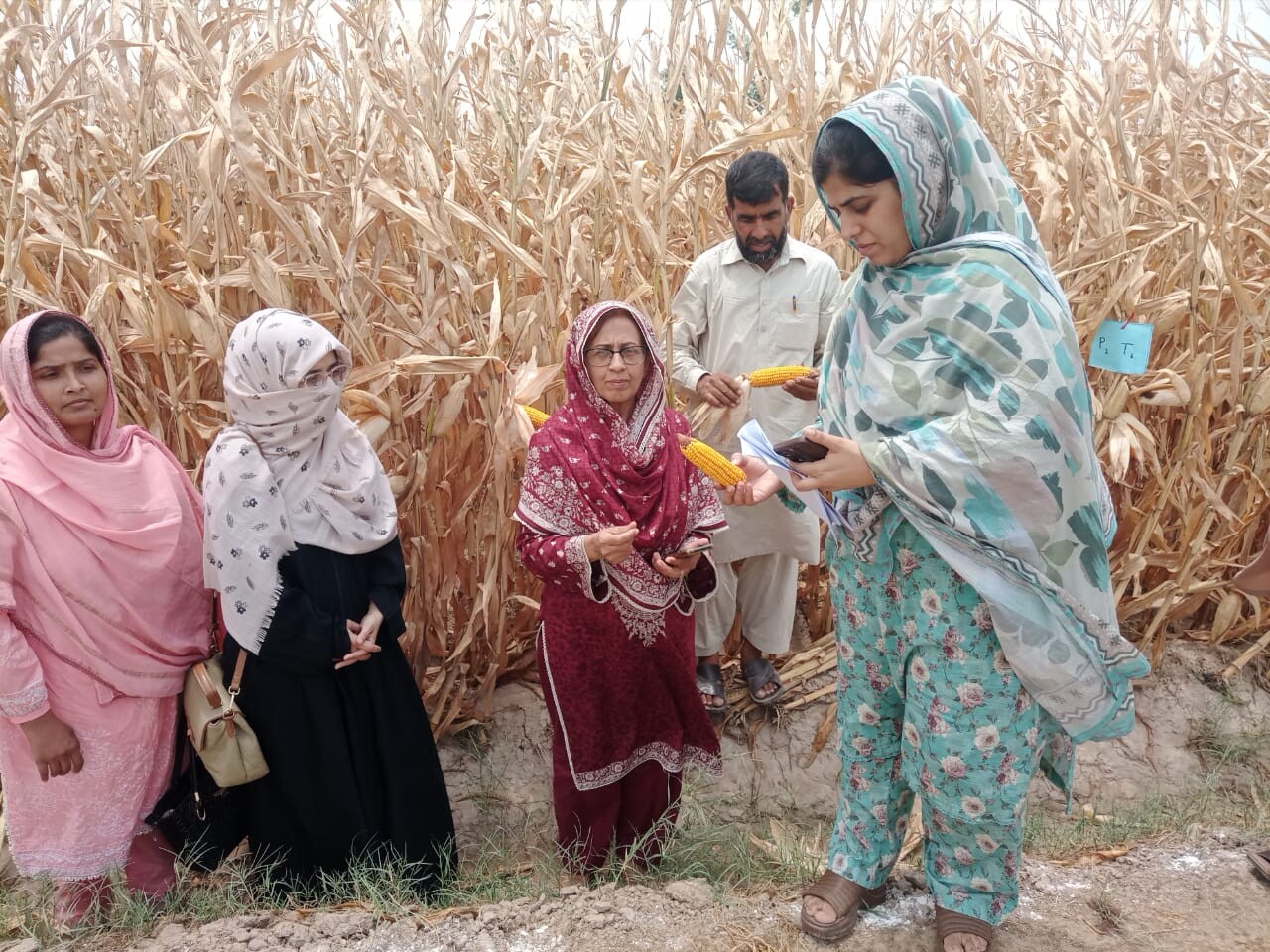
Participants, including farmers, extension agents, researchers, and key stakeholders from public and private sectors, experienced practical demonstrations of innovative technologies being implemented in the region. These included the use of dibbler for deep fertilizer placement, neem oil-coated urea, seed coating with Biozote (biofertilizer), and application of compost as a partial alternative to chemical fertilizers. The UAF fertilizer prediction model was also introduced, guiding farmers in calculating optimal nitrogen and phosphorus inputs based on target yields.
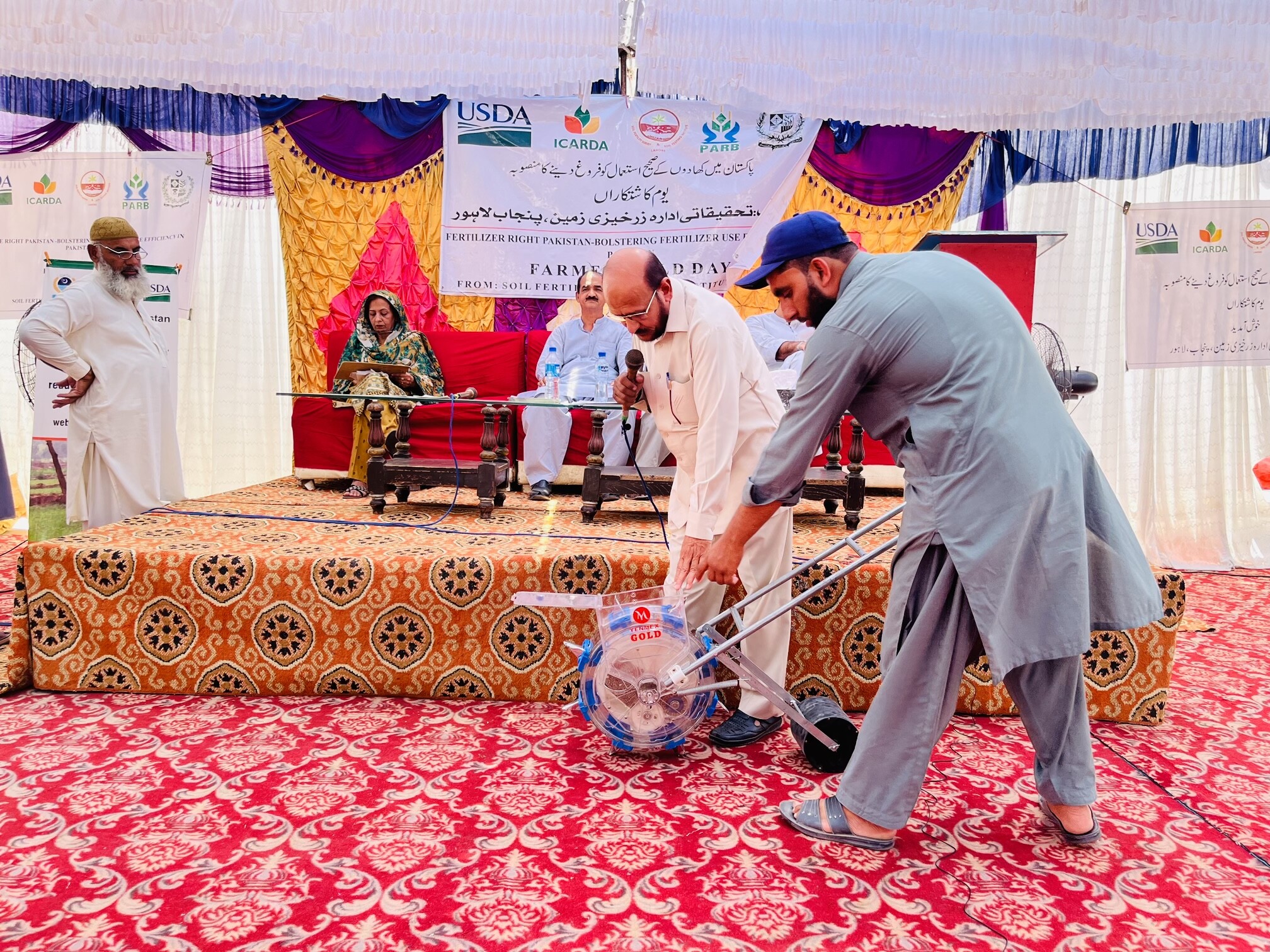
Dr. Imtiaz Muhammed, ICARDA’s FR project lead in Pakistan, emphasized the critical role of scaling such technologies through strategic partnerships with government bodies and large agricultural projects.
During visits to demonstration plots, side-by-side comparisons between innovative and traditional practices provided valuable insights into improved productivity and resource efficiency. Scientists from partner institutions also engaged directly with participants, addressing questions and highlighting the benefits of sustainable nutrient management.